Salt spray, wind and surge, every year
Panacea gets direct salt spray, real wind and periodic surge. That is not a hundred year event down here, it is a recurring condition, and a landscape that ignores it is a landscape you will be replacing.
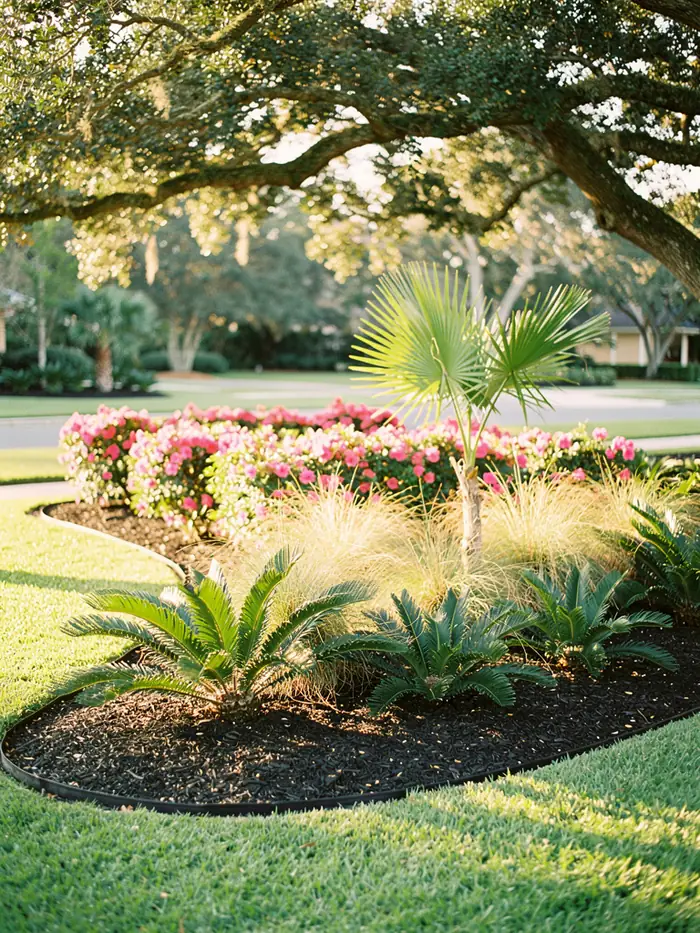
The plant list narrows to genuine coastal natives: sabal palm, wax myrtle, saw palmetto, yaupon, muhly grass, sea oxeye, coontie and beach sunflower. These are not the compromise choices, they are the ones that go under salt water and come back. Layering matters too, with the toughest material taking the exposure on the windward edge and the more tender planting sheltered behind it.
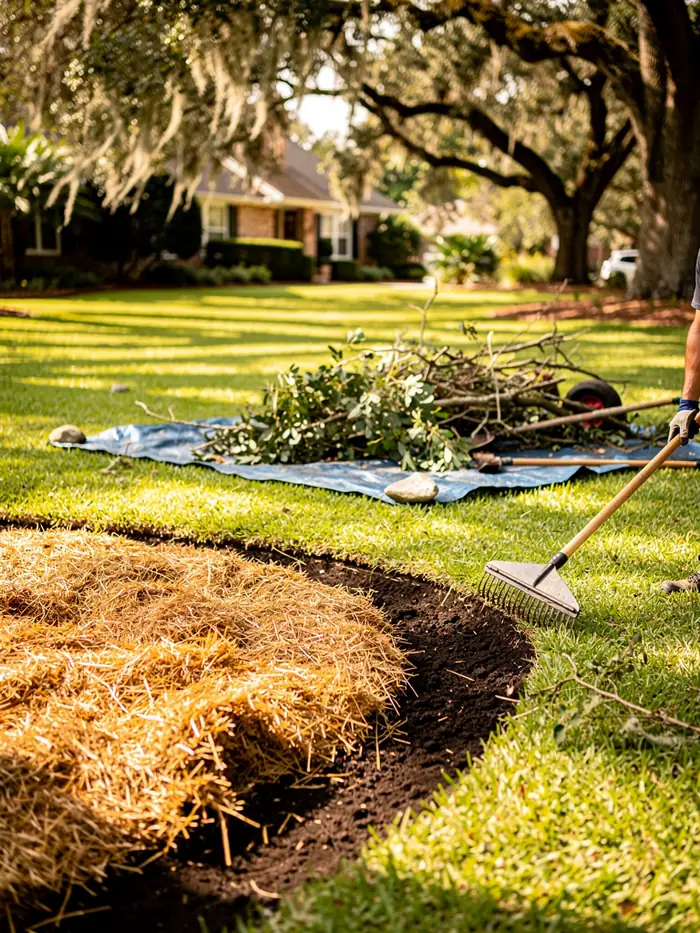
Turf is seashore paspalum where salt exposure is heaviest, St. Augustine where there is some shelter, bahia on the rough edges. Sandy coastal soil holds nothing, so beds get real organic matter at install and mulch or straw at proper depth.
A small Gulf town with a long memory
Panacea got its name from mineral springs that were supposed to cure everything, and the Gulf Specimen Marine Laboratory has been here for decades. It is a small, low, waterfront community on US 98 where nearly every property has some relationship to the bay.
Properties are a mix of waterfront homes, camps and small in-town lots. The useful goal for most of them is a landscape that looks intentional, holds up to the weather, and does not need to be rebuilt after every named storm.
What Panacea calls about
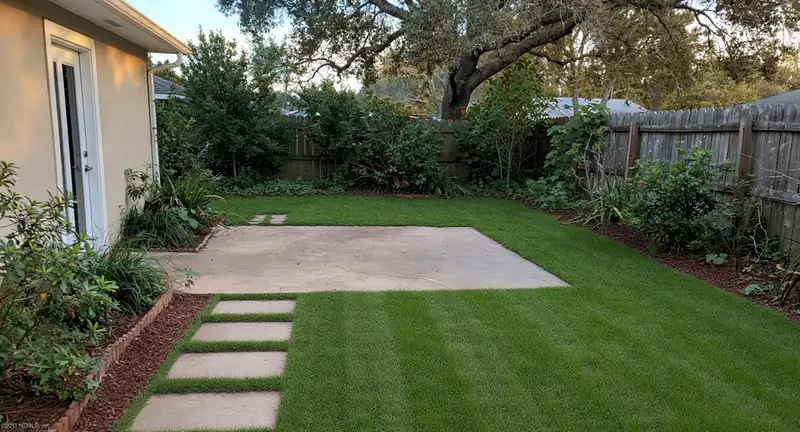
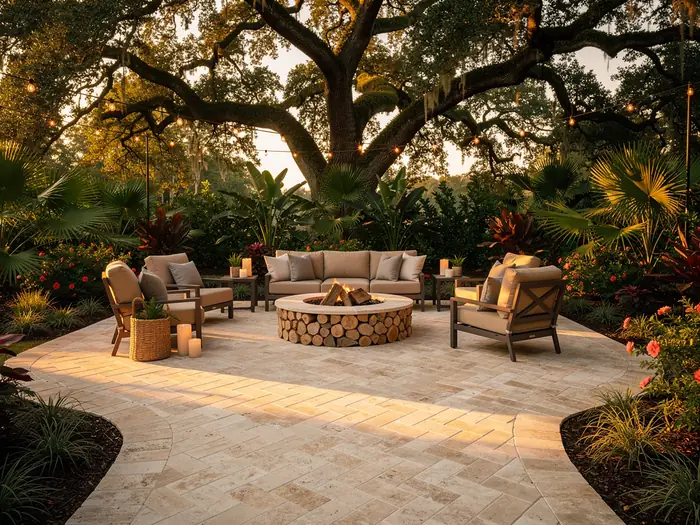
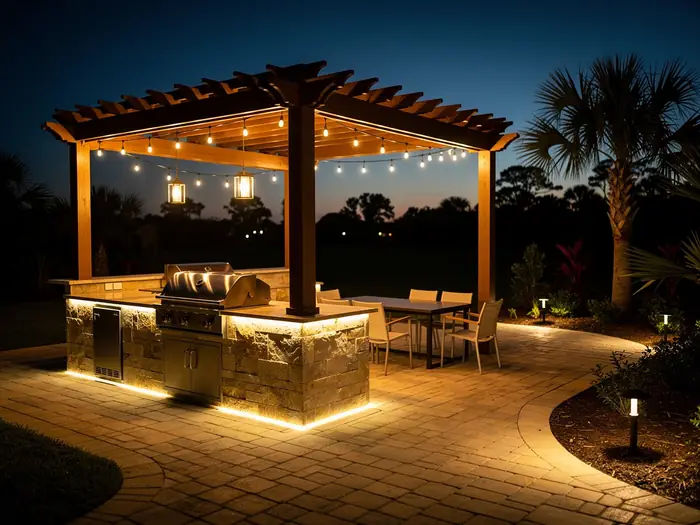
Salt tolerant planting and bed rebuilds, maintenance on coastal lots, storm cleanup and haul-off, and hardscape that stays put. Pavers over a properly compacted base handle ground movement and washout better than a poured slab here, and they can be lifted and reset if anything ever does shift.
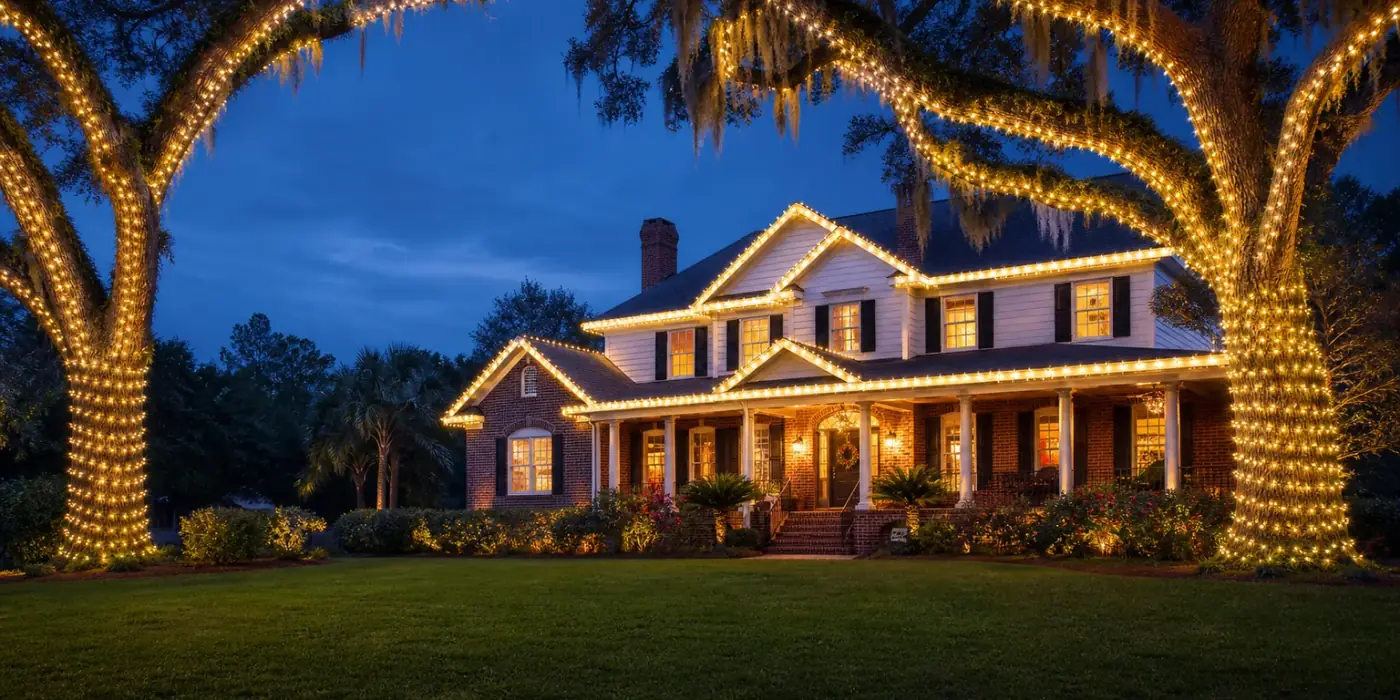
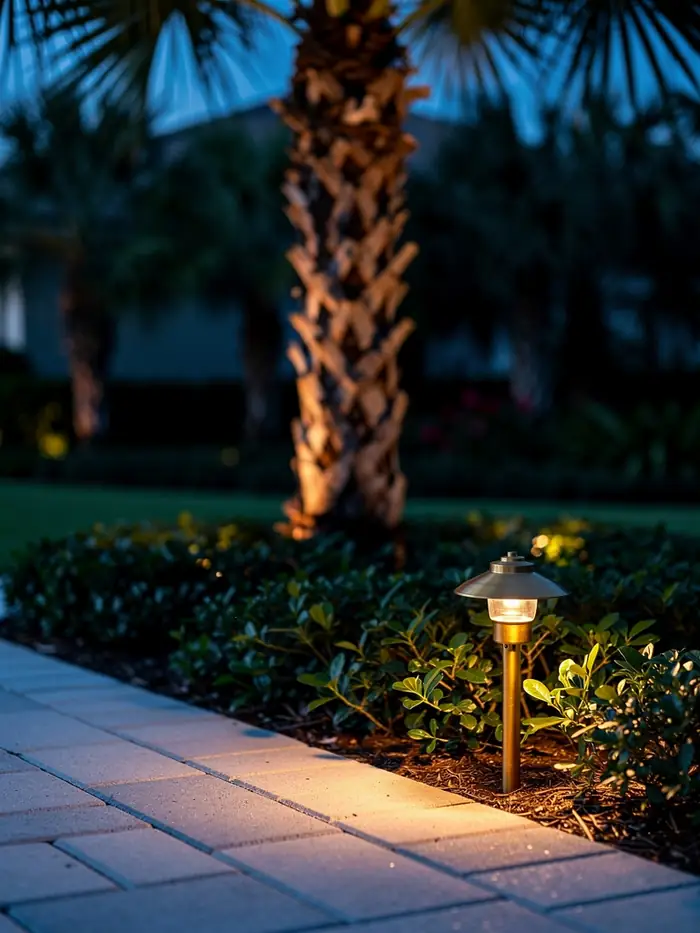
Outdoor living gets specified in marine grade materials or it does not get specified. Lighting gets brass and copper fixtures, because painted aluminum on this coast is a consumable.