Light the trees, not the neighbors
Tallahassee's live oaks are the single best lighting subject in the region and the most commonly wasted one. An oak uplit from two or three angles at a low warm color temperature turns into architecture at night. The same oak lit with one hot floodlight from the ground turns into a glare source that flattens the canopy and blinds anyone walking up the drive.
Good lighting is mostly restraint. Fewer fixtures, aimed carefully, warm rather than blue, shielded so you see the light and not the lamp. The goal is a property that looks composed after dark, not a property that looks like it is being searched.
Built to survive being outdoors here
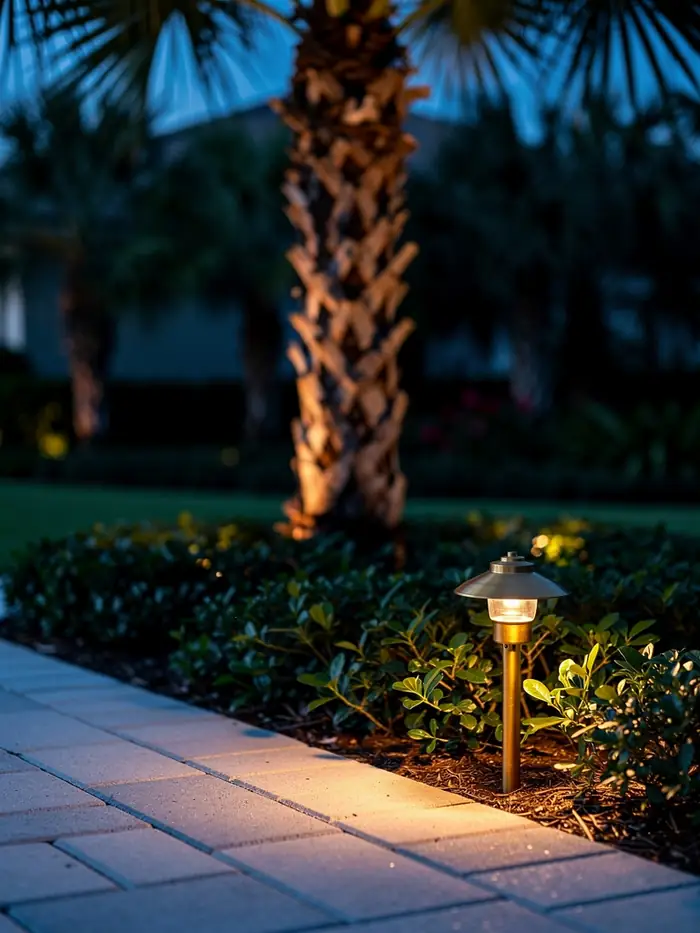
Low voltage is the right system for a residential landscape: safer to work around, easier to extend later, and it does not require the trenching and conduit that line voltage does. What it does require is honest components. Brass and copper fixtures develop a patina and keep working. Cheap painted aluminum corrodes and fails, faster near the coast.
Connections are where most systems die. Direct burial gel connectors, correctly sized cable so the far end of the run is not dim, and a transformer sized with headroom so the system can grow. Fixtures also get placed with the mature plant in mind, because a light aimed perfectly at a three gallon shrub is aimed at nothing in four years.
Holiday lighting, hung and removed
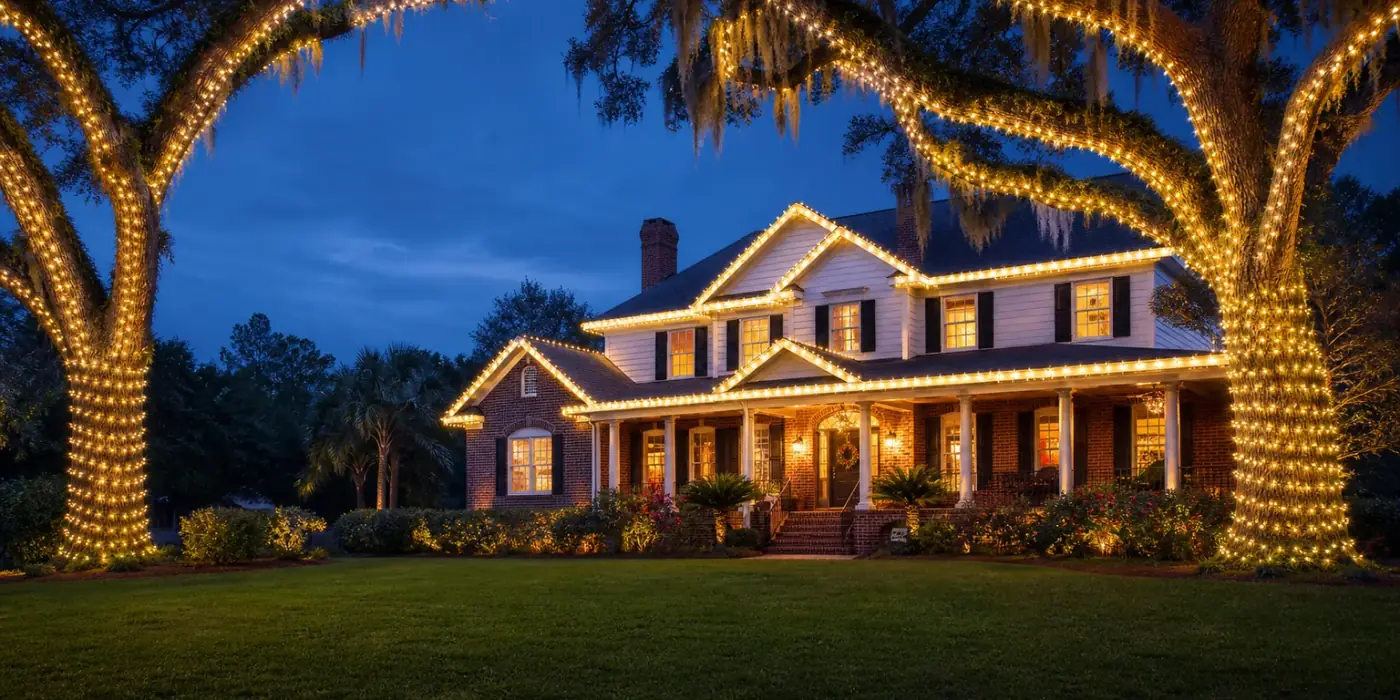
Holiday lighting is a real service, not an afterthought. Roof lines, entries, trees and columns, installed on a schedule in November and taken down and stored in January, which is the half that people actually want to hand off.
Nobody who owns a two story house in Killearn wants to be on a ladder in December. That is the entire product.