D&D Landscaping
Tallahassee, FL · Licensed and insured(850) 354-3601
Built tight, built level

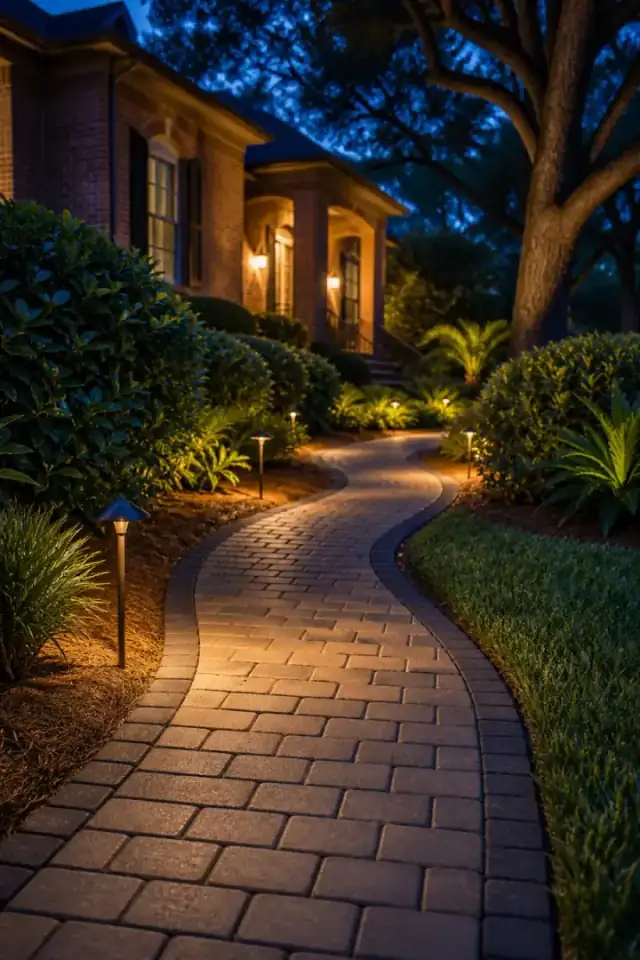
Paver patios, walkways and driveways built on a base that holds

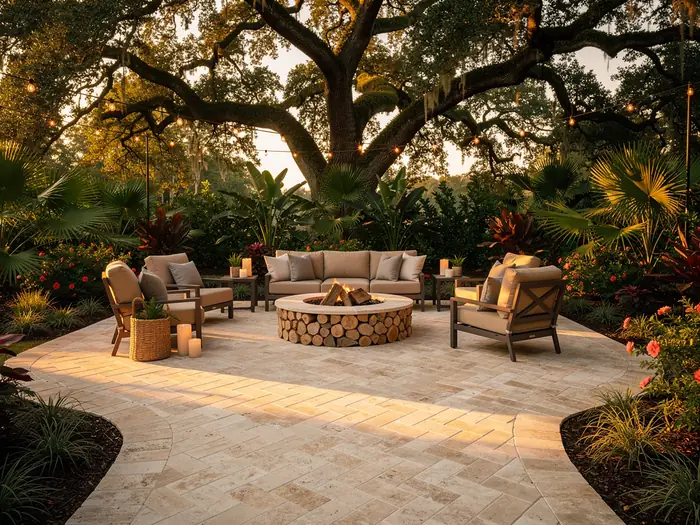
Patios, walkways, driveways, fire pits and seating walls in travertine, clay brick and concrete pavers. The part nobody sees is the part that decides it.

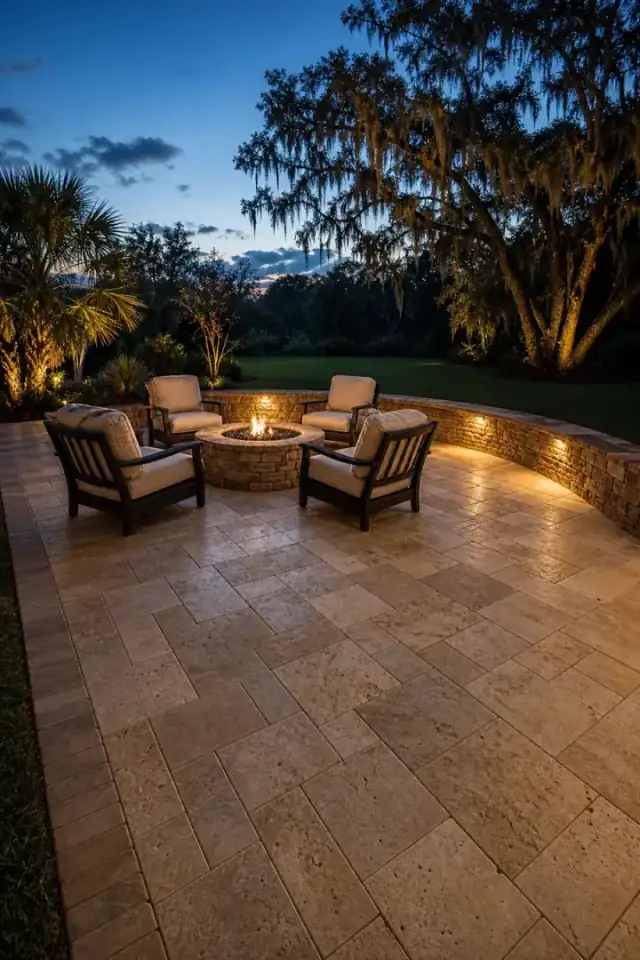
A clay brick paver patio laid in a tight herringbone pattern with a seating wall

The base is the entire job

A paver patio is a stack of decisions you will never see again after the last stone goes down. Excavate to the right depth for the use, because a patio and a driveway are not the same excavation. Lay and compact base material in lifts rather than dumping it all at once and rolling the top. Screed a consistent bedding layer. Cut clean against the edges instead of filling gaps with slivers. Lock the perimeter with real edge restraint.

Skip any one of those and the failure is predictable. Under-compacted base settles into dips that hold water. No edge restraint and the outer course walks outward until the joints open. Too thin a base under a driveway and the wheel paths sink within two seasons. The patio that still looks right in five summers and the one that does not were decided before anybody saw a paver.

Sand and clay punish shortcuts differently

Wakulla County sand does not hold a base by itself. It moves, and it will let a poorly built base migrate with it, which is why depth and compaction matter more here, not less. Tallahassee clay is the opposite problem: it holds water, and water trapped under a patio expands, softens and heaves.

On clay we build for drainage under the stone as much as on top of it. On sand we build for stability. Both get pitched properly so water runs off the surface and away from the house, because a patio that drains toward a foundation is a problem you paid to install.

Material, honestly compared

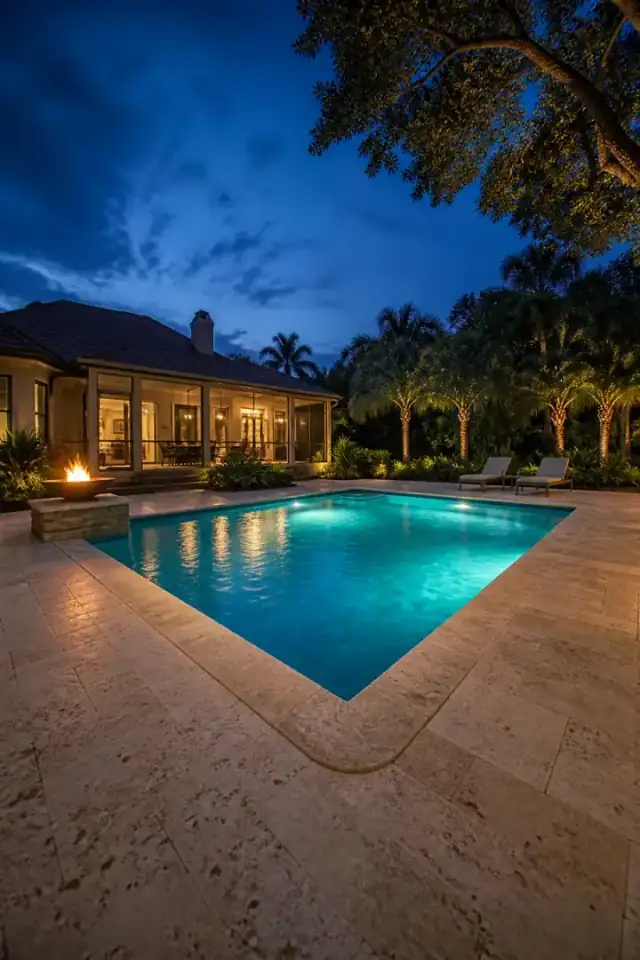
Concrete pavers are the workhorse. The widest range of shapes and colors, the best price per square foot, and they hold up fine under vehicles when the base is right. Clay brick is the traditional choice around Tallahassee's older neighborhoods and Monticello's historic district, and its color is fired all the way through, so it does not fade the way pigmented concrete eventually does. Travertine is the premium pick and stays noticeably cooler underfoot in August, which matters around a pool deck more than any brochure conveys.

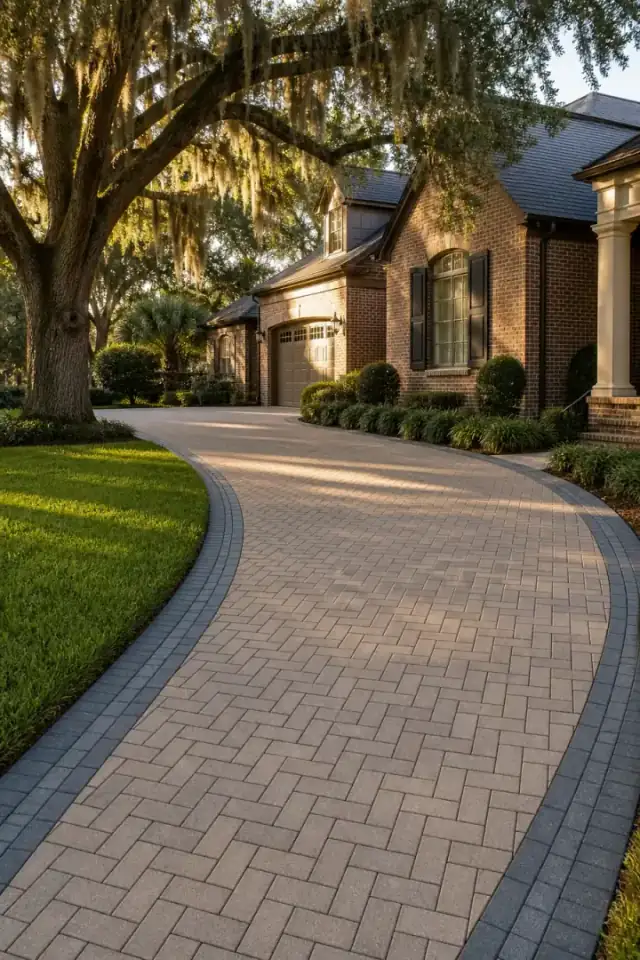
Whatever the material, we would rather talk you out of a pattern that generates a hundred cuts than sell you the labor. Herringbone locks under load and is what belongs in a driveway. Running bond is calmer and reads better on a small patio.
What is included

Written down, so nobody has to remember it.

  • Paver patios, walkways, entries and driveways
  • Fire pits and outdoor fireplaces
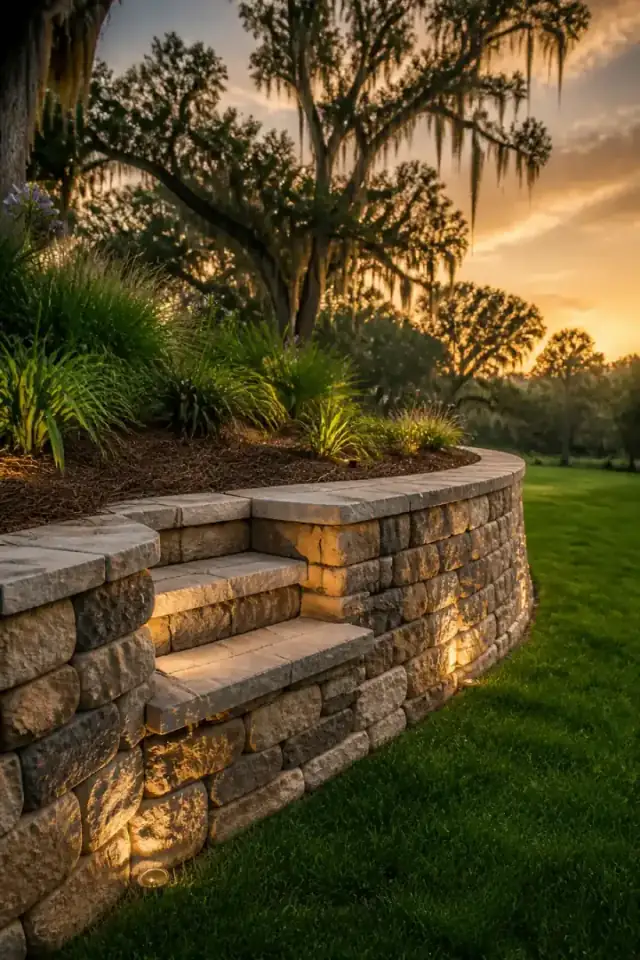
  • Retaining walls and seating walls
  • Travertine, clay brick and concrete pavers
  • Proper excavation, base in compacted lifts and screeded bedding
  • Polymeric joint sand and full perimeter edge restraint
  • Surface pitched to drain away from the structure
How it goes

Four steps, no mystery.

01

Walk it and measure

Use, traffic, slope, drainage and where the water goes today. Driveways and patios get different builds.

02

Material and layout

A real comparison of concrete, clay and travertine against your budget, plus a pattern that fits the space instead of fighting it.

03

Excavate and compact

Down to the right depth, base built in lifts and compacted at each one. The unglamorous days are the ones that matter.

04

Lay, cut, lock, clean

Tight joints, clean saw cuts, edge restraint set, polymeric sand swept and activated, and the site left clean.

Where we do it

Pavers & Hardscape across North Florida.

About 45 miles in every direction from Tallahassee. The ground is genuinely different town to town, so the approach is too.

Straight answers

Questions we get about pavers & hardscape.

How long does a paver patio last in North Florida?

A correctly built paver patio outlasts a poured slab here, because pavers flex with ground movement instead of cracking. The variable is not the paver, it is the base. Properly excavated, compacted and edge-restrained work stays flat for decades and can be lifted and reset if a tree root ever moves it. That is the honest reason to choose pavers over concrete in soil that moves.

Pavers or a concrete slab?

Concrete is cheaper up front and cracks eventually, and when it cracks the repair looks like a repair. Pavers cost more up front, handle ground movement without cracking, and can be pulled up and relaid in the same spot if anything ever needs to go under them. In clay and sand that both move, that repairability is worth real money.

Do you build retaining walls?

Yes, seating walls and retaining walls in block and stone. Anything holding back real grade gets built with proper base, backfill and drainage behind it, because a retaining wall without drainage is a wall storing water pressure until it fails.

Can pavers go over an existing concrete slab?

Sometimes, and we will tell you honestly when it is a bad idea. If the slab is sound, drains correctly and the added height does not put the finished surface above a door threshold or a flashing line, an overlay works and saves demolition. If the slab is already cracked or holding water, laying over it just hides a problem that will telegraph through.

Also on the truck

Work that goes with this.

Twenty minutes on the property, and a number within a day.

Free walkthrough. No charge, no pressure, mon to sat, 7am to 6pm.

Call (850) 354-3601Book a walk