Shade is the feature, not the extra
North Florida gives you a genuinely long outdoor season and a brutal middle to it. From late May through September, an unshaded patio is unusable between about eleven and five, which means an outdoor kitchen with no cover gets used a fraction of the time its owner imagined.
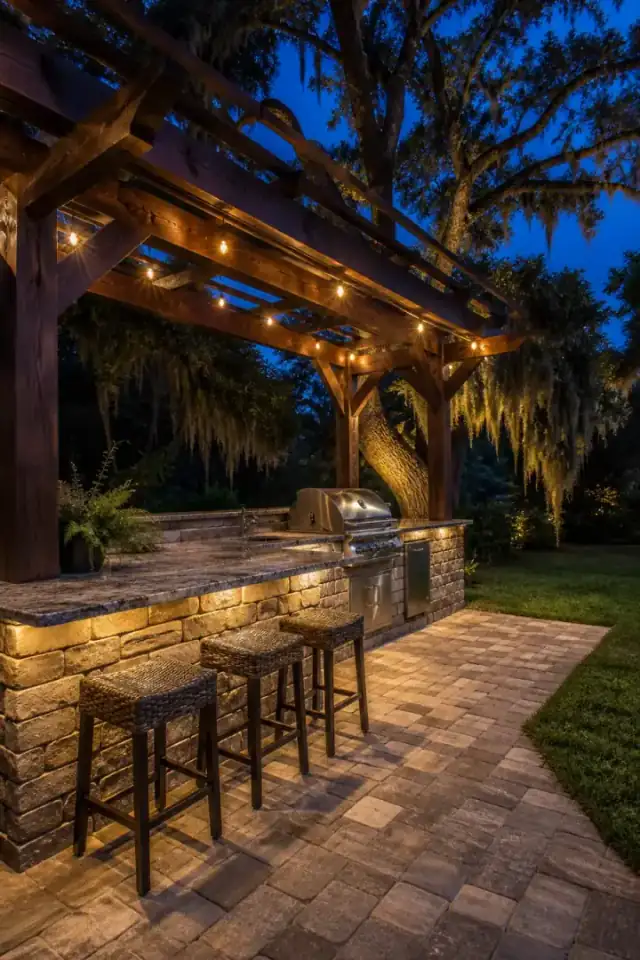
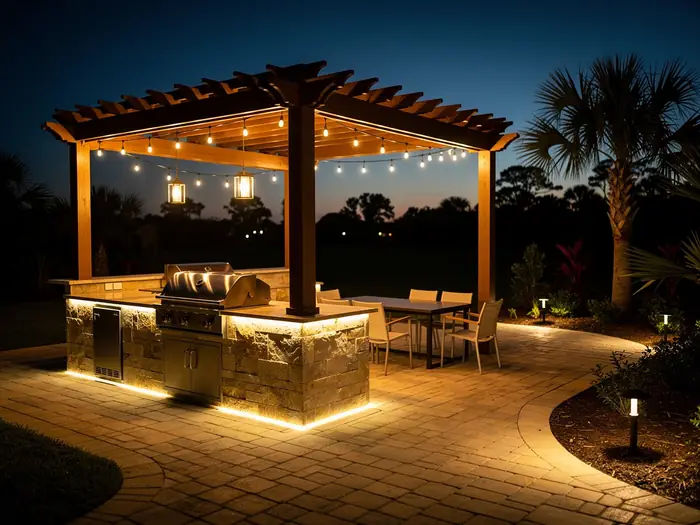
So the shade structure gets designed first, oriented against the actual afternoon sun angle on your lot, not dropped in wherever it looked balanced on a plan. A pergola with the right slat direction, a solid roof over the cook zone, or a run of shade sail can be the difference between a space used every week and a space photographed once.
Building a kitchen that survives the humidity
Gulf coast humidity and salt air are hard on outdoor kitchens. Cabinet boxes get built in materials that do not swell or rot, appliances and fasteners get specified in marine-grade or 304 stainless where it matters, and countertops get chosen for something other than how they photograph.
The parts people forget until they are living with it: a GFCI circuit run properly, a sink drain that goes somewhere legal, task lighting over the cook surface so the grill is usable after dark, and enough landing space either side of the grill that a plate has somewhere to go.
Fire, water and the rest of the room
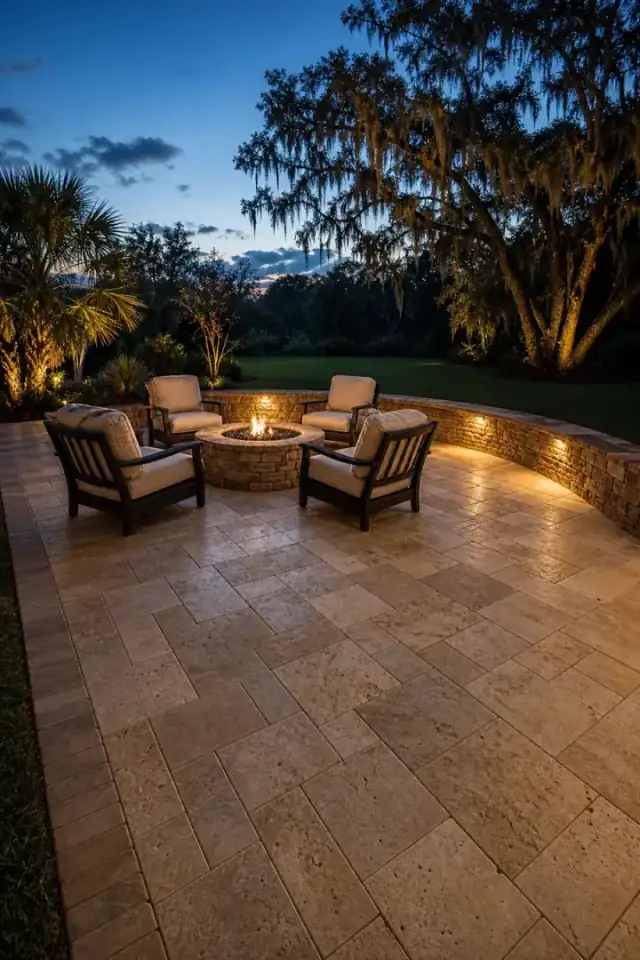
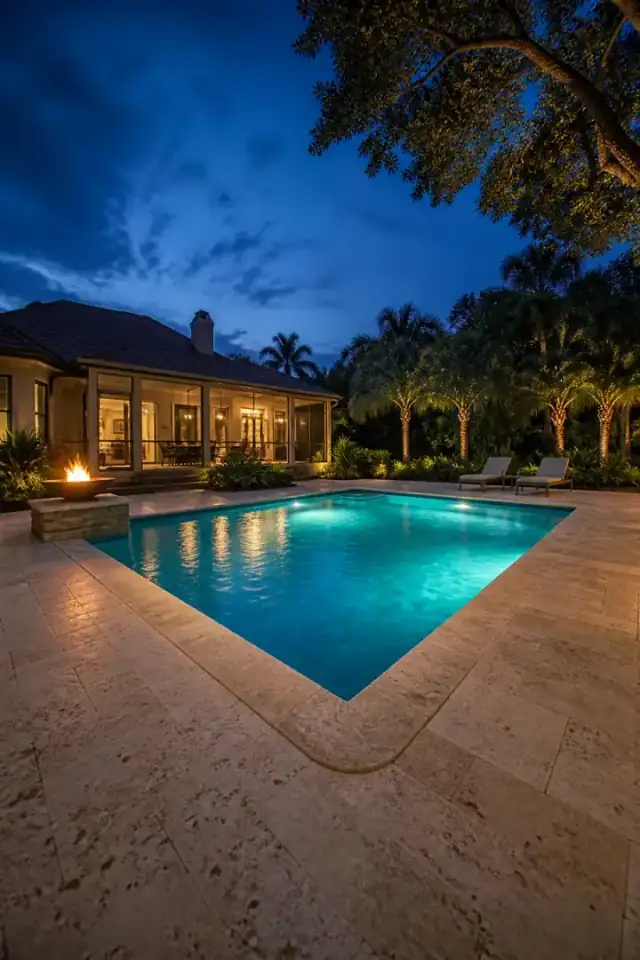
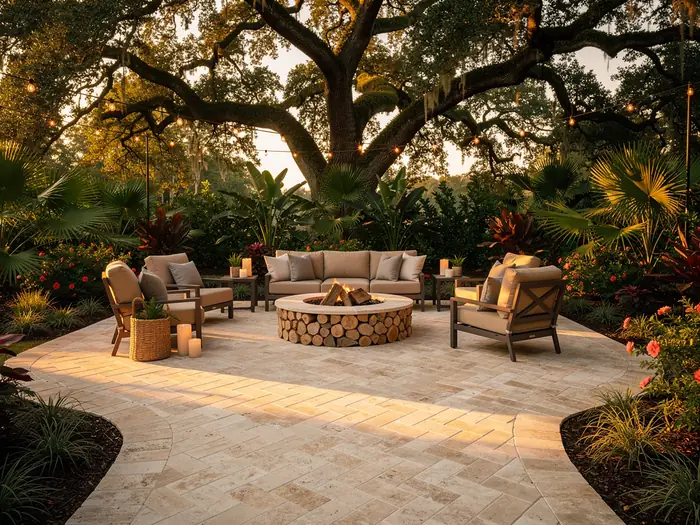
A fire feature extends the season on both ends and is the single highest-use addition on most North Florida backyards, because our winters are mild enough to sit outside most evenings. Gas is instant and controllable, wood is what most people actually want, and the choice mostly comes down to whether you want to tend it.
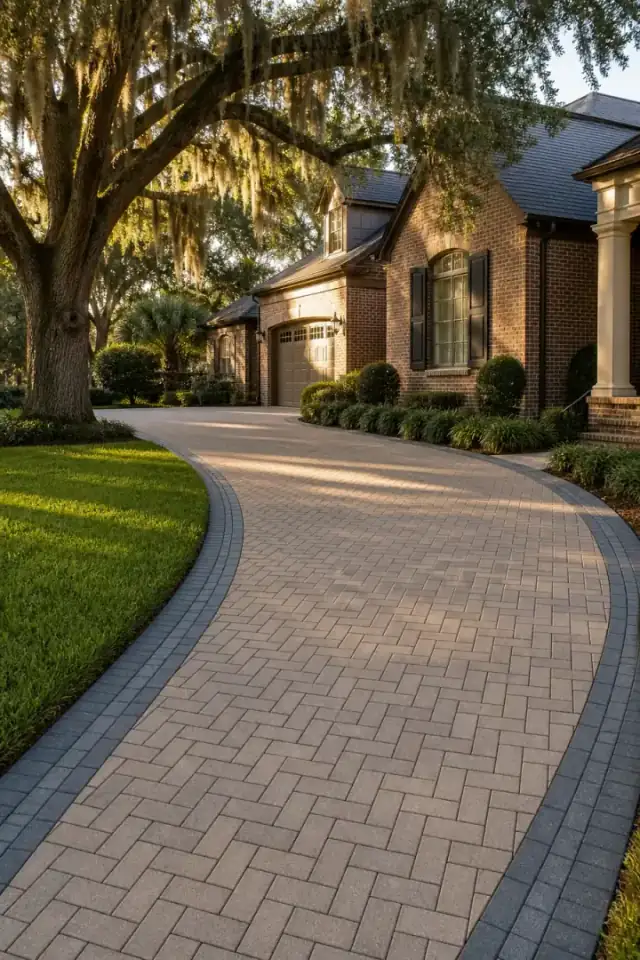
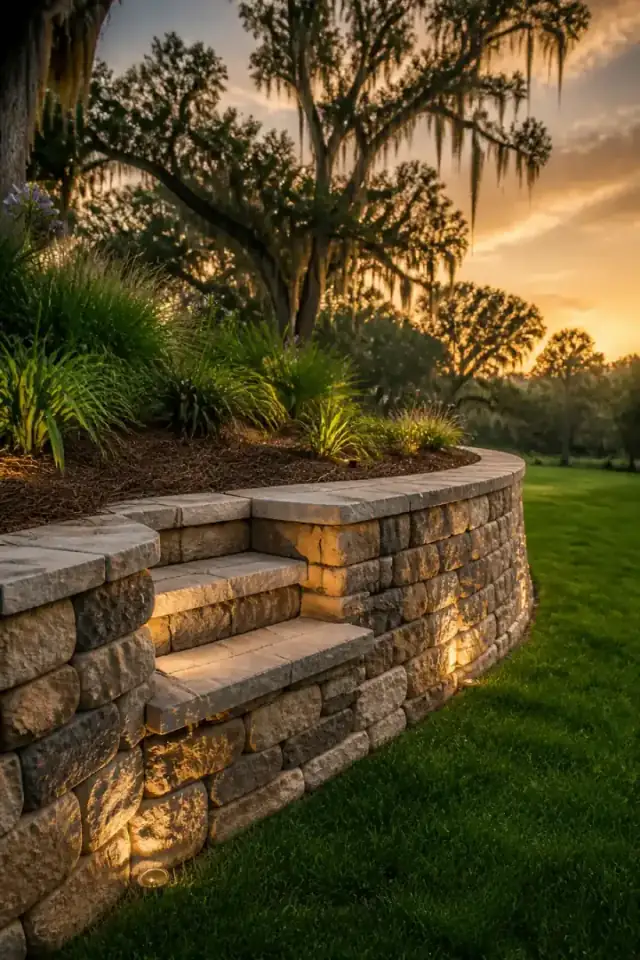
Everything gets tied back to the hardscape and the planting so the finished yard reads as one space. The crew that builds it is the crew that maintains it afterward, which is the entire reason the standard holds a year later.