D&D Landscaping
Tallahassee, FL · Licensed and insured(850) 354-3601
Designed for this climate

Landscape design and installation built for North Florida

Beds, plantings, sod and full front-yard renovations built around what actually thrives here, on soil that has been prepared to hold them.

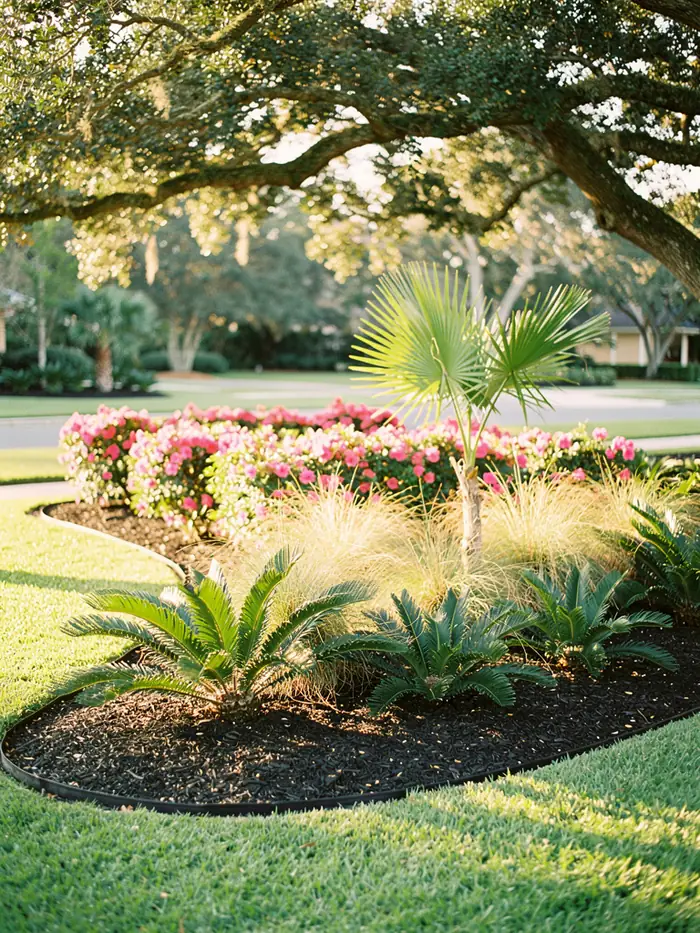
A newly installed planting bed with palms and ornamental grasses along a walkway

Zone 8b is the whole design constraint

Tallahassee and Wakulla County sit in USDA zone 8b, which is a strange place to garden. It is hot and wet enough in July to rot a Mediterranean plant and cold enough in a bad January to kill the tropicals that the big-box nursery will happily sell you in April. Anything specified here has to take 95 degrees with afternoon thunderstorms and then take a hard freeze four months later.

That narrows the palette to plants that genuinely belong: live oak and southern magnolia for canopy, sabal palm, yaupon and wax myrtle for structure, loropetalum, dwarf yaupon and Indian hawthorn for mass, muhly grass and liriope for texture, and camellia and azalea for the shade under the oaks. Those are not the fashionable choices. They are the ones still standing in year five.

The soil decides before the plants do

Tallahassee's red clay holds water and compacts under equipment until roots cannot push through it. Wakulla's sand does the opposite and lets water and nutrients run straight past the root zone. A bed installed the same way in both places will fail in both places for opposite reasons.

So the prep changes. Clay beds get broken up, amended and graded so water leaves rather than pools against a foundation. Sand beds get organic matter worked in to hold moisture and fertility long enough for a plant to establish. This is the invisible half of the job and it is the half that decides whether you are replacing plants in two years.

Sod, drainage and grading

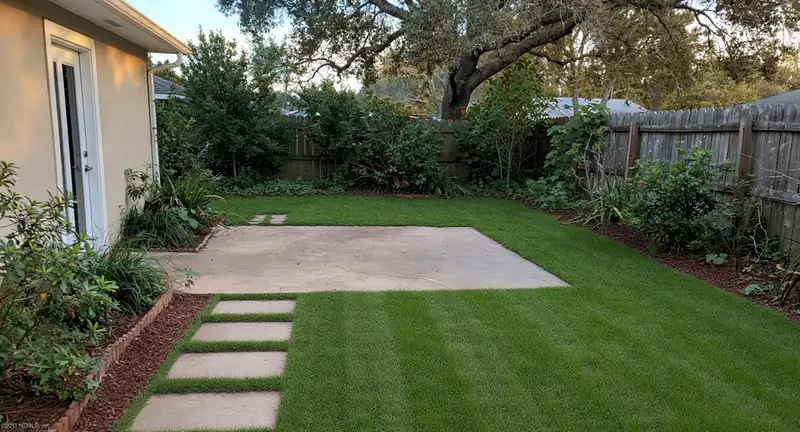
New sod goes down on prepared, graded ground, not on top of whatever was there. That means killing the existing weed load, grading so water runs away from the house, and matching the turf to the light the yard actually gets. Floratam St. Augustine wants sun and will thin to nothing under a dense oak canopy no matter how much you feed it.

Drainage work is often the real fix on a property that keeps losing plants. French drains, swales and regrading move water off the areas that are drowning. In a place that can take six inches of rain out of one August afternoon, where the water goes is not a detail.
What is included

Written down, so nobody has to remember it.

  • Planting design specified for zone 8b heat, humidity and freeze
  • Bed construction, soil amendment and clean cut edges
  • Sod installation on properly prepared and graded ground
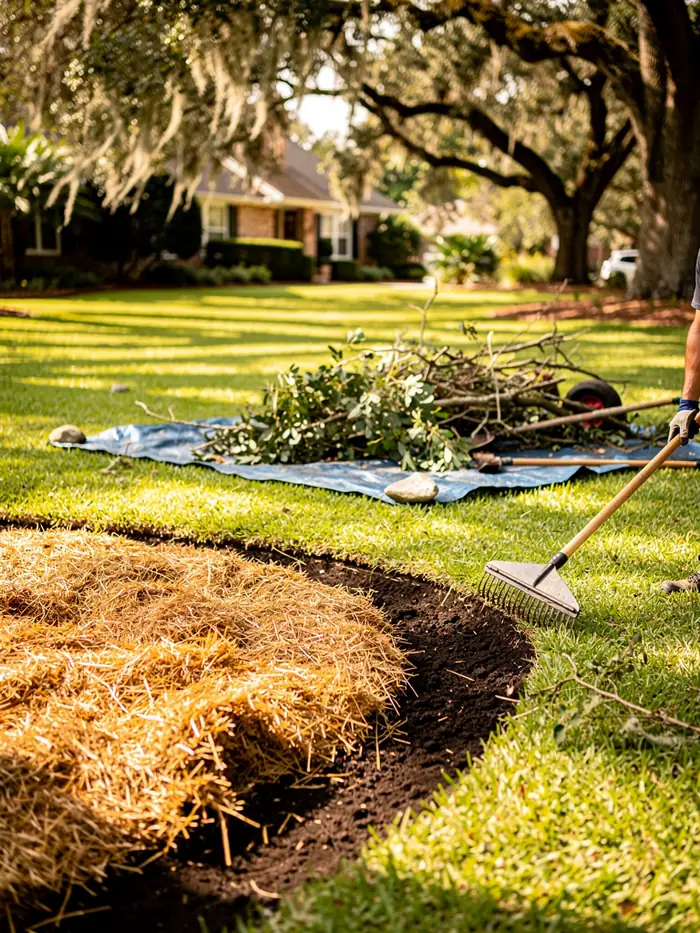
  • Mulch and pine straw, installed at the right depth and pulled off trunks
  • Drainage correction, French drains, swales and regrading
  • Front-yard and full-property renovations
  • Seasonal color rotation on residential and commercial properties
How it goes

Four steps, no mystery.

01

Walk the property

Sun, shade, slope, drainage, existing plant health and what you actually want the space to do.

02

A plan and a price

A plant list and a layout you can see, with a written price. Hardscape and install work takes a little longer to price than maintenance because we price the materials properly instead of guessing.

03

Prep

Removal, soil work and grading. This is the part that decides the outcome and the part nobody photographs.

04

Install and hand back

Plants in, mulch down, cleaned up, and a straight conversation about water for the first eight weeks while roots establish.

Where we do it

Landscape Design & Installation across North Florida.

About 45 miles in every direction from Tallahassee. The ground is genuinely different town to town, so the approach is too.

Straight answers

Questions we get about landscape design & installation.

What plants actually survive in Tallahassee?

The reliable backbone here is live oak, southern magnolia, sabal palm, yaupon holly, wax myrtle, loropetalum, Indian hawthorn, muhly grass, liriope, and camellia and azalea in the shade. Zone 8b gives you humid 95 degree summers and occasional hard freezes, which rules out most true tropicals unless you are willing to replace them after a bad winter.

When is the best time to install landscaping here?

Fall through early spring, roughly October to March. Planting into a North Florida summer means the plant is trying to establish roots in the hardest eight weeks of the year, and it will need far more water to survive. Sod is more forgiving and goes down most of the year, as long as somebody is committed to watering it.

Mulch or pine straw?

Pine straw is cheaper, is what the local pines drop anyway, and stays put on a slope better than most people expect. Hardwood mulch holds moisture longer and looks more finished around a front entry. Plenty of properties use both, straw on the wooded edges and mulch on the beds people walk past. Either one gets installed at depth and pulled back off trunks, because mulch piled against bark is how trees rot.

Can you fix a yard that floods?

Usually yes, and usually it is grading before it is a drain. We walk the property during or right after a rain if we can, find where the water is actually coming from, and correct with regrading, a swale or a French drain. Adding plants to a spot that drowns just costs you the plants.

Also on the truck

Work that goes with this.

Twenty minutes on the property, and a number within a day.

Free walkthrough. No charge, no pressure, mon to sat, 7am to 6pm.

Call (850) 354-3601Book a walk